
Change is inevitable. Kingdoms are built and then conquered. Buildings are designed, constructed, and then razed. Landforms appear, change the landscape, and then the process begins again. Over time many different
agents of change contribute to what we experience and observe. These agents of change can act as catalysts that unify or separate. In viewing "Variable Wedge," a landscape sculpture by Sam Richardson, we are reminded of the complexities of change. Many University of Nebraska students, faculty, visitors, and community members unknowingly pass by this sculpture daily. Since it belongs to the
Sheldon Museum of Art Sculpture Garden, it is also purposefully viewed by visitors to the art museum. This unique mixture of audience types can change from moment to moment, requiring the argument presented by the art object to be accessible to a variety of viewers. Audience members can have many different backgrounds, which requires the argument itself to be variable. When viewed through certain rhetorical lenses, we are able to determine that there is a unifying concept that all possible argument can be represented by: change is both inevitable. Sam Richardson, who had a background including landscape painting and "landscape sculptures" formed from plastics, had a dual purpose when composing this impressive art object. He was able present such a simple, timeless argument in an aesthetically pleasing way, representing both the beauty of the natural landscape and the paradigm of change. His composition is at the same time modern and timeless. In order to achieve this, there are few intricate details but many general themes used. Specifically, the art object utilizes the concept of negativity to help strengthen the argument it presents.

The naturalistic elements of this sculpture are indicative of the setting sun over a mountain range. The gray wedges bear a resemblance to a chain of peaks--individual, yet unified. Their unchanging edifice reminiscent of the majestic purple mountain majesties that appeal to many. These wedges could stand alone creating an argument responsive to the importance of the natural setting that we often take advantage of. However, viewing this art object from the stance of change unlocks new meaning. The use shape and color, specifically the warm colors
wedged into the composition, allow the viewer to see the connection between man and nature while regarding the changes that occur because of this delicate relationship. This sculpture is a
wedge inserted by man into nature, serving as a reminder that humans are a major agent of change. The alignment of most of the seven pieces that comprise this art object utilize the rhetorical strategy of repetition, and with repetition contrast is possible. There is definitely contrast created by the void when the pieces become unaligned. The
negative space that is created by the misalignment of the wedges speaks to the concept of negativity. Why did the artist chose to leave this void within his composition? As I examined this question, the importance of what was not included in the composition of this art object became apparent. When I address this art object in an intimate letter, I will better be able to explain my observations and insights, as well as examine the art object, it's purpose, and finally argument through a rhetorical lens incorporating the concept of negativity.
 Change is inevitable. Kingdoms are built and then conquered. Buildings are designed, constructed, and then razed. Landforms appear, change the landscape, and then the process begins again. Over time many different agents of change contribute to what we experience and observe. These agents of change can act as catalysts that unify or separate. In viewing "Variable Wedge," a landscape sculpture by Sam Richardson, we are reminded of the complexities of change. Many University of Nebraska students, faculty, visitors, and community members unknowingly pass by this sculpture daily. Since it belongs to the Sheldon Museum of Art Sculpture Garden, it is also purposefully viewed by visitors to the art museum. This unique mixture of audience types can change from moment to moment, requiring the argument presented by the art object to be accessible to a variety of viewers. Audience members can have many different backgrounds, which requires the argument itself to be variable. When viewed through certain rhetorical lenses, we are able to determine that there is a unifying concept that all possible argument can be represented by: change is both inevitable. Sam Richardson, who had a background including landscape painting and "landscape sculptures" formed from plastics, had a dual purpose when composing this impressive art object. He was able present such a simple, timeless argument in an aesthetically pleasing way, representing both the beauty of the natural landscape and the paradigm of change. His composition is at the same time modern and timeless. In order to achieve this, there are few intricate details but many general themes used. Specifically, the art object utilizes the concept of negativity to help strengthen the argument it presents.
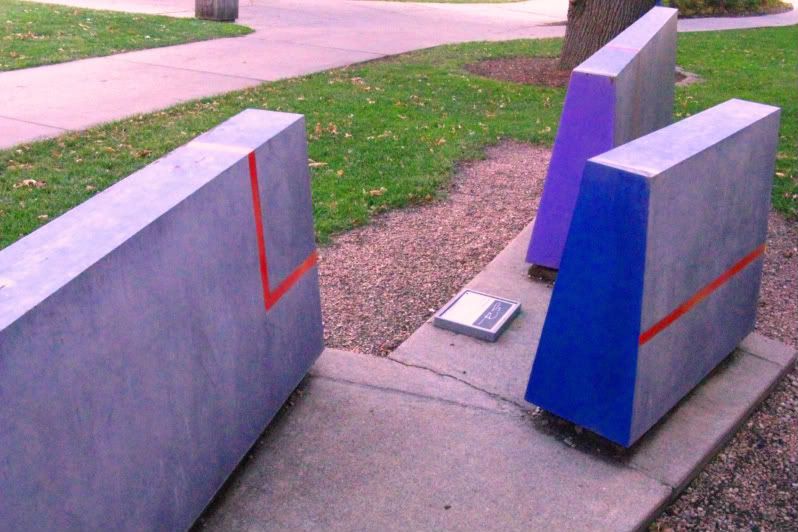 The naturalistic elements of this sculpture are indicative of the setting sun over a mountain range. The gray wedges bear a resemblance to a chain of peaks--individual, yet unified. Their unchanging edifice reminiscent of the majestic purple mountain majesties that appeal to many. These wedges could stand alone creating an argument responsive to the importance of the natural setting that we often take advantage of. However, viewing this art object from the stance of change unlocks new meaning. The use shape and color, specifically the warm colors wedged into the composition, allow the viewer to see the connection between man and nature while regarding the changes that occur because of this delicate relationship. This sculpture is a wedge inserted by man into nature, serving as a reminder that humans are a major agent of change. The alignment of most of the seven pieces that comprise this art object utilize the rhetorical strategy of repetition, and with repetition contrast is possible. There is definitely contrast created by the void when the pieces become unaligned. The negative space that is created by the misalignment of the wedges speaks to the concept of negativity. Why did the artist chose to leave this void within his composition? As I examined this question, the importance of what was not included in the composition of this art object became apparent. When I address this art object in an intimate letter, I will better be able to explain my observations and insights, as well as examine the art object, it's purpose, and finally argument through a rhetorical lens incorporating the concept of negativity.